
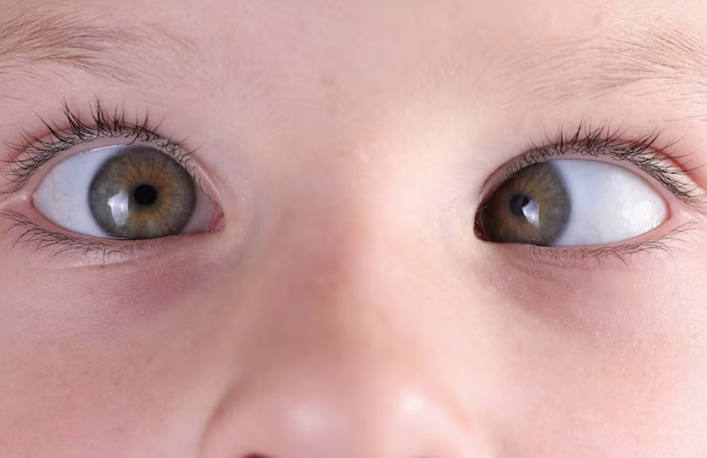
What is Squint?
Squint, medically known as strabismus, is a condition where the eyes are misaligned and point in different directions. This imbalance can cause difficulty with depth perception, eye strain, and overall visual discomfort. While traditional treatments such as surgery or corrective lenses can help, vision therapy has emerged as a modern and highly effective approach — focusing on training the eyes and brain to work together for better alignment, coordination, and lasting visual comfort.
Frequently Asked Questions
What causes Squint in eyes?
Squint, also known as strabismus, occurs when the muscles that control eye movement are not properly coordinated. This misalignment can be constant or intermittent, and it may affect one or both eyes.
The main cause of squint is the brain’s inability to fuse or form a single 3D image from the two slightly different images received by both eyes. To avoid double vision (diplopia), the brain purposefully deviates one eye away from the point of fixation.
Major reasons for squint include:
Amblyopia
Inability of fusion
Binocular vision imbalance
Developmental delay and CVI (Cortical Visual Impairment)
Paralysis or stroke
Injuries or tumors
Genetics
Age Criteria for Squint Treatment?
Thanks to Neuroplasticity, Squint can be corrected at any age through a proper Vision Therapy program, as the brain can adapt, build new connections, and restore healthy eye coordination.
Can Vision Therapy Help even after Squint Surgery?
Vision Therapy is widely recommended by leading squint surgeons around the world to help restore binocular vision in patients, significantly enhancing the overall success rate of squint surgery.
Check out this inspiring video by Dr. Susan Barry, a renowned neuroscientist, who shares her personal journey — explaining how, despite undergoing three unsuccessful squint surgeries, she ultimately achieved lasting improvement through Vision Therapy:
https://www.youtube.com/watch?v=XCCtphdXhq8&t=152s
Traditional Treatment Approaches For Squint?
Surgery:
Traditionally, surgery has been the most common method to correct squint (strabismus). During the procedure, surgeons adjust the eye muscles to help realign the eyes. However, while this may improve appearance, it often fails to restore true binocular vision, which depends on how the brain coordinates both eyes. In many cases, the surgery doesn’t address this root cause — it’s like giving a quick physical fix to a problem that actually lies within the brain’s visual processing.
Corrective Lenses:
In some situations, glasses with special lenses can help manage squint, particularly when it’s linked to refractive errors such as farsightedness. Although these lenses can support clearer vision and sometimes reduce eye strain, they usually don’t correct the underlying muscle coordination or brain-eye connection needed for proper alignment.
Vision Therapy: A Comprehensive Approach For Treating Squint
Vision Therapy offers a gentle, non-surgical, and holistic way to treat squint (strabismus). It uses a carefully designed series of eye exercises and visual activities that help improve eye coordination, focusing skills, depth perception (3D vision), and overall binocular vision.
At Team Optom Abhinav Maharwal, we specialize in providing Vision Therapy for squint management — both at our clinics and through online sessions. So far, our dedicated team has successfully treated over 150 patients with different types of squint, helping them achieve better alignment and clearer, more comfortable vision.
Watch our YouTube video – “All About Squint” to learn more: Click here
Key Components of Vision Therapy for Squint
1. Eye Exercises:
Vision therapists design personalized exercises to strengthen the eye muscles and enhance coordination. These may include tracking moving objects, shifting focus between near and far distances, and practicing smooth, controlled eye movements to train the eyes to work together effectively.
2. Computer-Based Programs:
With the help of modern technology, Vision Therapy now includes interactive computer-based programs and games. These activities make therapy more engaging and enjoyable, especially for children, while promoting consistent visual improvement.
3. Prism Therapy:
Prism lenses are sometimes used as part of the therapy to support proper eye alignment. By gently altering how light enters the eyes, prisms encourage both eyes to focus and function as a team.
4. Home-Based Activities:
Patients are often given simple at-home exercises to reinforce what’s practiced during clinic sessions. Regularly performing these activities is key to long-term success, helping to maintain progress and strengthen visual skills over time.
Benefits of Vision Therapy
Improved Eye Coordination:
Vision Therapy works on the root cause of squint by training and strengthening the eye muscles to move and focus together. This helps improve eye alignment and promotes the development of binocular vision, where both eyes function as a team.
Enhanced Depth Perception (3D Vision):
By improving focusing ability and eye teaming, Vision Therapy helps restore depth perception, enabling individuals to experience the world in true 3D — with better clarity, balance, and spatial awareness.
Non-Invasive and Personalized:
Vision Therapy offers a gentle, non-surgical, and customized solution for squint treatment. Each program is tailored to the patient’s unique visual needs, making it a safe, flexible, and highly effective approach for people of all ages.